









Your Step-by-Step Guide to Starting a University Podcast

Podcast listening has grown over 350% in the last decade, is your university making the most of this opportunity?

“Podcasting is a natural extension of how universities share knowledge and build real connections. When done well, it goes beyond content, it becomes a space for thought leadership and meaningful engagement. The real question isn’t ‘Why start a podcast?’ but ‘What are we missing without one?’”
— Archie Pineda, CEO of University.fm

To guide you through the process, we’ve mapped out actionable steps, from strategy and content planning to production and distribution, helping you build a university podcast with clear purpose and long-term value.

Step 1: Identifying your goals

A common mistake people make today is jumping into a trend without clearly understanding why they are doing it. So, before starting a podcast, it is important to answer one key question: Why? Why do you want to start podcasting for your university or institution?

Believe it or not, the answer to this question will serve as your core foundation. It will guide your decisions, shape your content, and help sustain the podcast over time. When your purpose is clear, it becomes easier to stay consistent and intentional with everything you create.

5 common reasons why universities and institutions create branded podcasts:

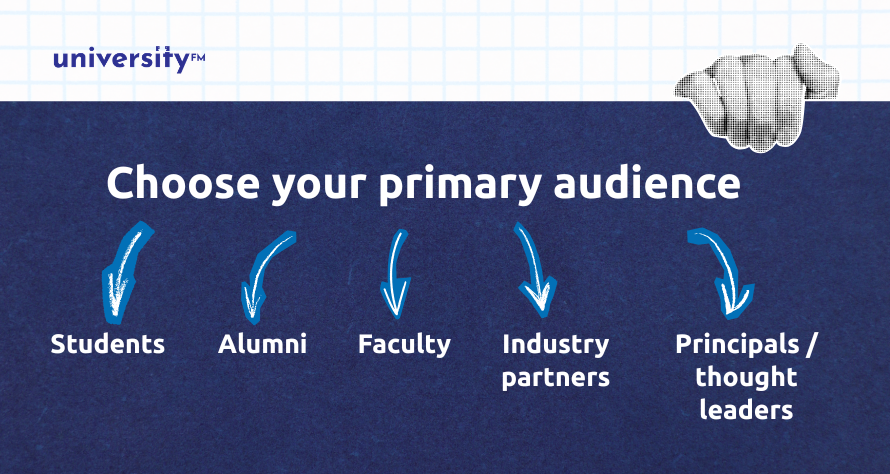
Step 2: Define your audience & understand their needs

Once your goals are clear, the next step is to define who your audience is and what they actually need. Understanding your audience will help you create content that resonates, engages, and provides value.

When it comes to university podcasting, there is no such thing as “everyone is our audience.” If your podcast has a clear goal, it must also have a clearly defined audience. Trying to speak to everyone often results in content that resonates with no one. A focused audience helps you shape the topics you discuss, the guests you invite, and the tone and format of the show.

A common mistake to avoid when creating content for your audience

Many universities and institutions create content based on what they want to share, rather than taking the time to research what their audience actually wants to hear. Without understanding audience interests, behaviors, and needs, the content may not resonate. This is why it is important to look at audience insights and data, identify the stories they care about, and create content that reflects those interests.

Step 3: Develop Your University Podcast Concept & Format

This step is crucial, as it shapes how your podcast will sound, feel, and engage with your audience.

This stage is often best discussed with a team or a professional partner—such as University.fm—who can provide expert insights and creative guidance on how to build a successful branded podcast for universities.

Popular Podcast Formats for Universities

Choosing the right format will influence the tone, structure, and listener experience of your higher education podcast.

  1. Interviews (faculty, students, alumni) – A host interviews a guest to share experiences, insights, research, or personal journeys connected to the university community.
  2. Solo educational episodes – A single host explains a topic, shares insights, or breaks down research in a clear and accessible way for listeners.
  3. Panel discussions – Multiple guests discuss a topic together, offering different perspectives and expertise in a conversational format.
  4. Storytelling / documentary style – A narrative-driven format that combines interviews, narration, and sound design to tell deeper stories or explore a specific issue in detail.

Can You Host a University Podcast Without Experience?

Many faculty members, students, and university leaders worry about this. But like any other skill, hosting a podcast can be learned and improved over time with practice.

If you’re looking to build confidence behind the microphone, we’ve created a guide with simple, practical tips to help you improve: 10 Ways to Improve Your Broadcasting and Speaking Skills.


How to Define Your Podcast Concept

Once you’ve chosen a format, the next step is to shape the overall concept of your university podcast. Start by clarifying the following elements:

  1. Create a unique value proposition – What makes your podcast different from other university podcasts?
  2. Brainstorm episode topics – List potential themes, guests, or research topics you want to feature.
  3. Decide on your tone – Will your podcast feel formal, conversational, inspirational, or educational?


Plan Your Content Pipeline

Once your concept and format are clear, the next step is to plan your content pipeline to ensure consistency and sustainability. Start by creating a content calendar, either monthly or quarterly, to map out upcoming episodes and topics. This helps your team stay organized and maintain a steady release schedule. 

Step 4: Create your podcast branding

Branding is what makes your podcast recognizable and memorable. Start by choosing a podcast name that aligns with your institution’s identity and reflects its core theme.

Next, design cover art and visual elements that are visually appealing and consistent with your university’s branding guidelines. Strong visuals help your podcast stand out across platforms.

You can also collaborate with your team or a podcast partner to brainstorm your intro and outro. This includes choosing the music and voice that will shape the tone of your show and create a cohesive listening experience.

Here are different approaches to creating podcast cover art:

Text-only artwork

Host image + text

Illustration/logo + text

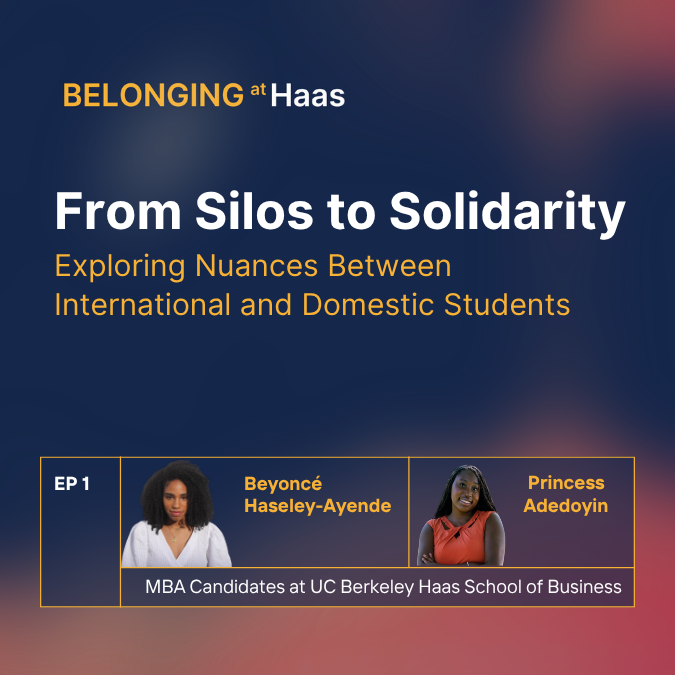
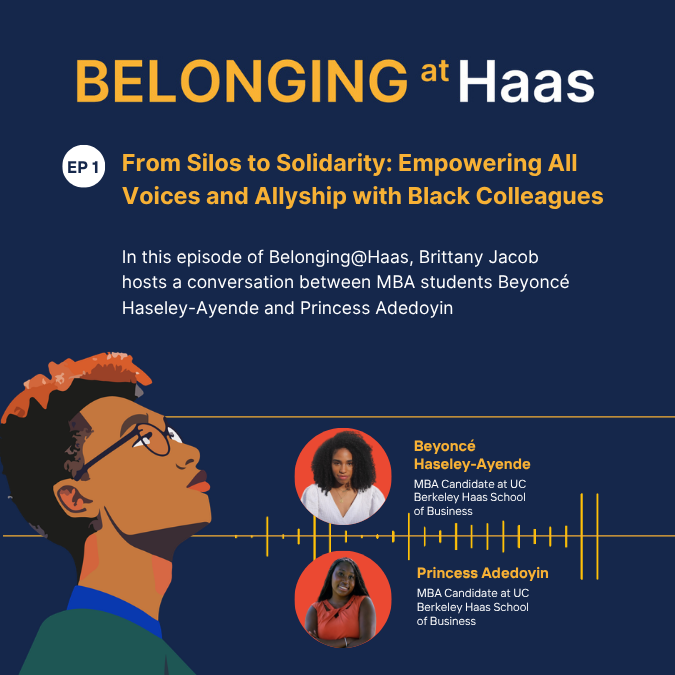
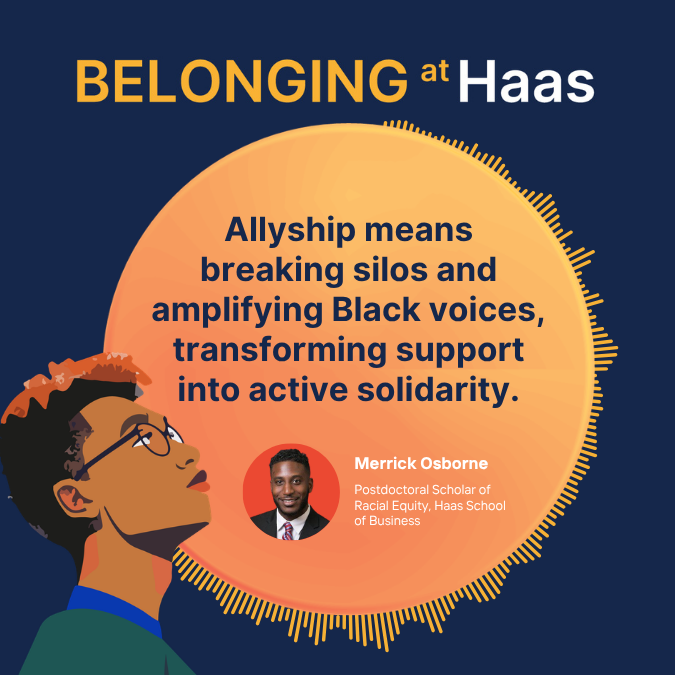
And here’s a sample of consistent branding designed by University FM for the UC Berkeley Haas School of Business podcast, Belonging@Haas, showing how the same visual system is applied across episode artwork, audiogram, and social card. 

Show artwork

Episode artwork

Audiogram

Social Card

Step 5: Get Ready To Launch

You might be thinking now: Do we need a full studio setup to make this work? The short answer is no. For most universities and institutions, getting started doesn’t require a large investment, just a thoughtful approach to the basics. 

With the right equipment, a quiet recording environment, and simple editing practices, you can produce a podcast that sounds professional and aligns with your institution’s standards. The goal isn’t perfection from day one, but creating a reliable setup that allows you to show up consistently and confidently.

Here’s what our team of experts suggests you start with:

 Equipment

  1. Microphone 

   2. Headphones

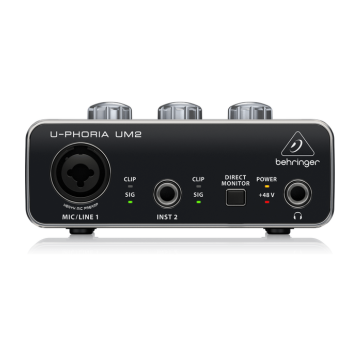
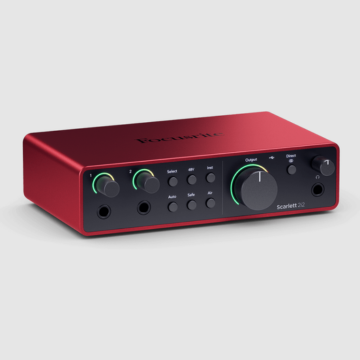
  3. Audio interface / Sound card

 Editing software


Distribution & Publishing

The next step is to focus on distribution and publishing to ensure your podcast reaches the right audience. Start by choosing a reliable hosting platform that fits your needs, whether it’s Spotify for Podcasters, Apple Podcasts, or platforms like Buzzsprout, Anchor, Libsyn, or Podbean for broader RSS management. 


You may explore these free podcast hosting platforms:

  1. Spotify for Creators
  2. Acast
  3. RedCircle 
  4. Riverside
  5. Pinecast
  6. more

From there, create SEO-friendly episode titles and descriptions by using keywords your audience is likely searching for, while keeping titles concise and descriptions clear and informative. It’s also important to include show notes and key takeaways for each episode, such as relevant links, guest information, and three to five actionable insights presented in a scannable format. 

You can check out UnSILOed Podcast with Greg LaBlanc’s show notes as an example.

Promotion Strategy

We’re almost at the finish line, and after putting so much effort into producing your podcast, the next step is to ensure it reaches a wider, yet still targeted audience. Implementing a clear promotion strategy is essential for driving growth and long-term success. 


Here are the best ways to promote your podcast and grow your audience faster:

  • Leverage existing channels – Maximize the platforms you already own by promoting your podcast through your university website, email newsletters, and social media to reach your existing audience.
  • Repurpose into digestible content – Extend the life of each episode by turning it into audiograms, short video clips, quote graphics, and blogs that are easier to consume and share across platforms.
  • Cross-promote with other podcast shows, institutions, or guest speakers – Expand your reach by featuring guest speakers and encouraging them to share the episode with their networks, while also cross-promoting with other institutional channels to tap into new and highly relevant audiences.


Step 6: Track your podcast growth

It’s important to track your podcast’s performance to understand what’s working and where improvements can be made. By monitoring the right metrics, you can make informed adjustments to both your content and promotion strategies over time. 


Key KPIs to evaluate your podcast’s success

Most of these metrics can be easily tracked through your podcast hosting platform’s analytics tools.

  • Downloads and listens
    Track how many people are tuning in to gauge overall reach and growth. 
  • Audience Retention
    Measure how long listeners stay engaged throughout each episode to assess content quality and relevance.
  • Engagement (Shares, Comments)
    Monitor interactions across platforms to understand how your audience is responding and engaging with your content.
  • Conversion (Event Sign-ups, Inquiries)
    Evaluate how well your podcast drives desired actions, such as event registrations or inquiries, especially for institutional goals.


Starting a University Podcast Now

Launching a branded podcast might seem like a big step, but like any meaningful initiative, it starts with a clear purpose and a willingness to begin. You don’t need a perfect setup or a large team to get started, just a strong story, the right voices, and a commitment to showing up consistently.

Your institution already has valuable ideas, research, and stories worth sharing. Podcasting simply gives them a new platform to be heard. So the question isn’t whether your university should start a podcast, it’s when you’ll begin.

Take the first step today!

Launch your university podcast with us.

Book a Strategy Call

Related Posts