

In a digital world overflowing with content, universities and institutions face a common challenge: how do you reach people in a way that actually cuts through the noise?
Social media, email marketing, webinars, virtual events — the list of communication tools keeps growing. Yet one medium has quietly held its ground for years: podcasting.
So in 2026, the question is: Are podcasts still worth the investment for universities and institutions?
The short answer is yes — and in many ways, more than ever.
Here’s why.
Podcasting is Continuously Growing
Podcast listenership isn’t slowing down. Globally, there were 584 million podcast listeners in 2025, and that number is projected to grow to 619 million in 2026. In the U.S. alone, 55% of people aged 12 and up listen to podcasts monthly. That’s roughly 158 million potential listeners.
These audiences include exactly the people universities want to reach: students, educators, alumni, professionals, researchers, and lifelong learners.
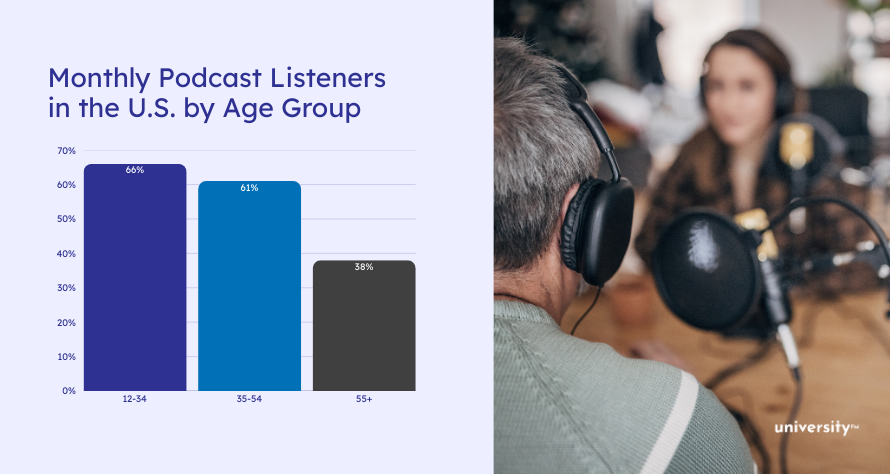
Source: Infinite Dial 2025
Why Podcasts Work So Well for Higher Education
1. They fit naturally into our busy lives.
Students, faculty, and knowledge seekers are always multitasking. Podcasts integrate seamlessly into daily routines — commuting, exercising, doing chores, or walking between classes.
Listeners spend an average of 7 hours of podcast listening per week, and over 70% finish most or all of an episode, a completion rate far higher than most digital formats. That kind of attention is rare in digital media and gives universities a unique opportunity to engage deeply with long-form storytelling.
2. They build trust.
Podcasts create strong connections. A study by iHeartMedia and PMX, “Exploring the Brand Benefits of Trust and Companionship in Audio”, found that listeners consistently perceive podcast hosts as honest, trustworthy, and highly authentic. This makes podcasts a uniquely powerful channel for universities seeking credibility, connection, and long-term engagement and not just visibility. Beyond trust in the host, research also shows that podcasts strengthen student engagement, comprehension, and academic performance.

This means podcasts are uniquely suited for:
- Communicating research in accessible ways
- Sharing faculty expertise
- Showcasing student voices
- Highlighting institutional values
- Building emotional connection with alumni and donors
3. They attract learners.
Podcasts draw an audience that’s actively engaged and eager to learn. Studies show that 71% of listeners tune in primarily to gain knowledge, making them a highly attentive and motivated audience.
With a wide range of genres — from education and business to arts, science, and culture — podcasts allow audiences to choose content that matches their personal and professional interests, increasing both engagement and learning impact.
Why Podcasts Are Especially Strategic in The Educational Space
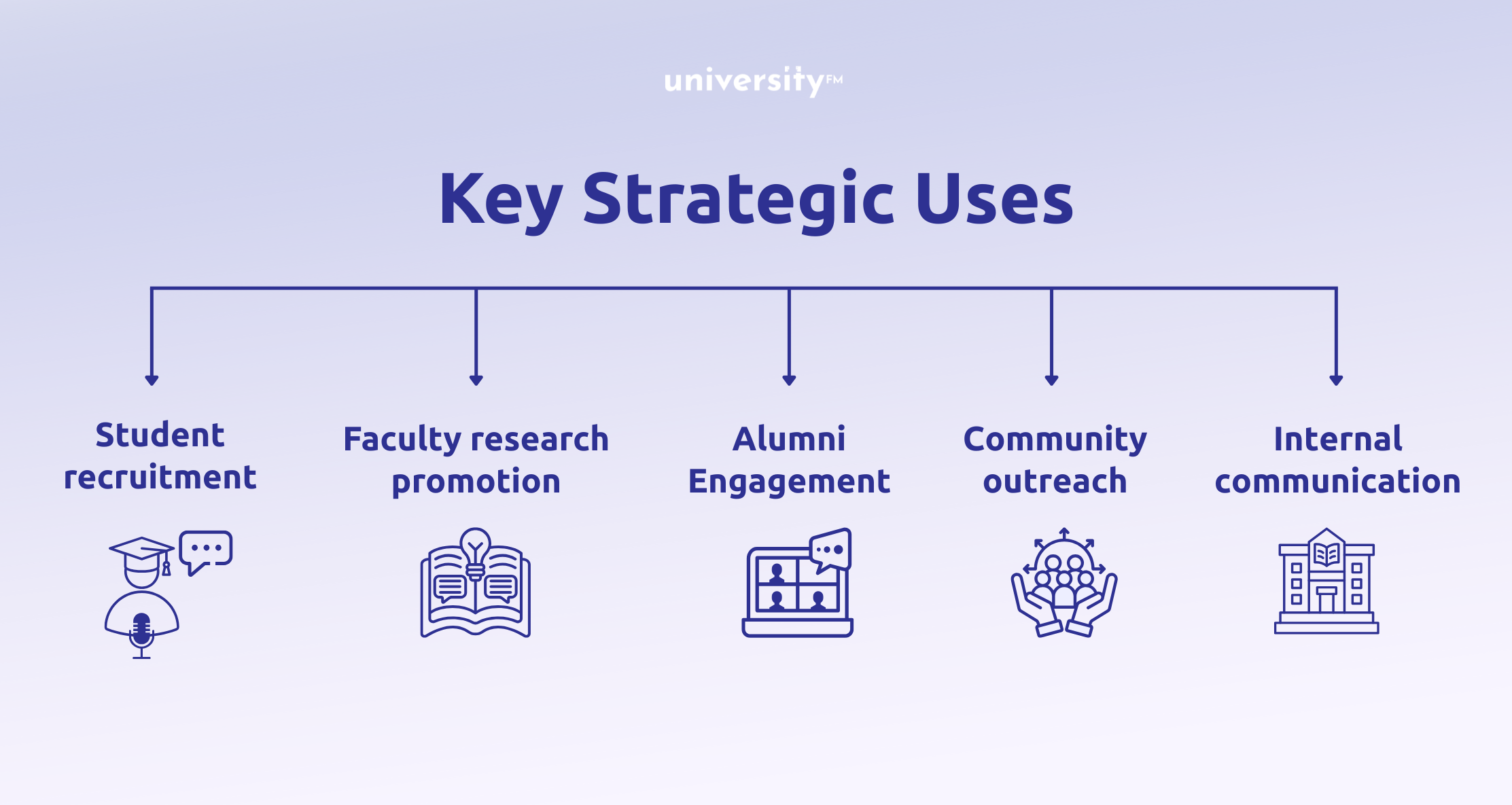
Universities are complex ecosystems, serving multiple audiences at once. Podcasts make it possible to speak to each group authentically and purposefully.
What Has Changed in 2026?
Video podcasts are on the rise. Edison Research’s Podcast Consumer 2025 reports that 37% of U.S. audiences aged 12 and older engage with video podcasts monthly, creating opportunities to:
- Repurpose podcast content across different platforms
- Increase discoverability
- Humanize faculty and leadership
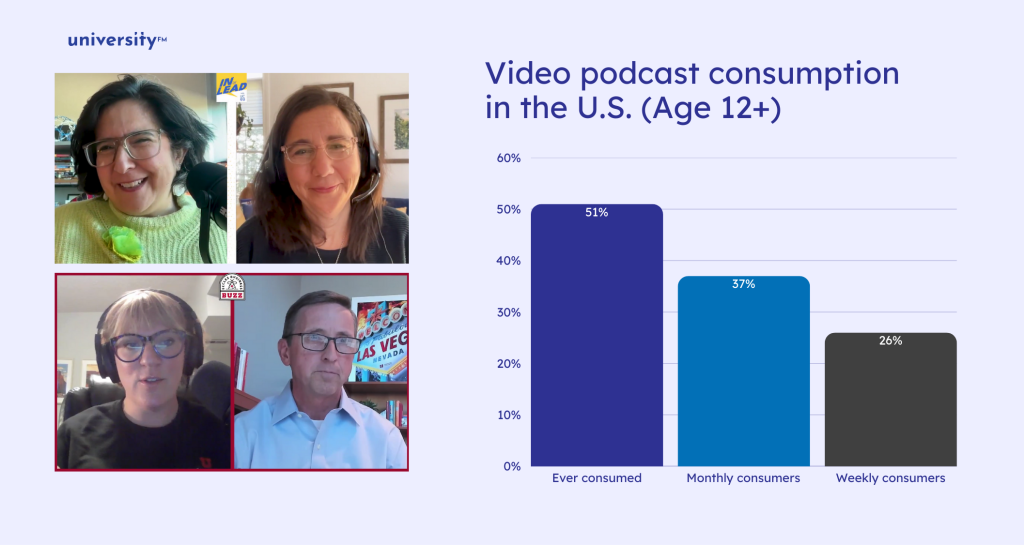
Source: Infinite Dial 2025
The result? More touchpoints, greater visibility, and stronger brand storytelling without creating entirely new content.
Final Verdict
So, are podcasts still a viable communication strategy for universities and institutions in 2026? Yes and for many, they should be a cornerstone of long-term communication strategy. In a world where attention is fleeting, podcasts offer something rare: time, trust, and meaningful connection. And in higher education, those three elements make all the difference.