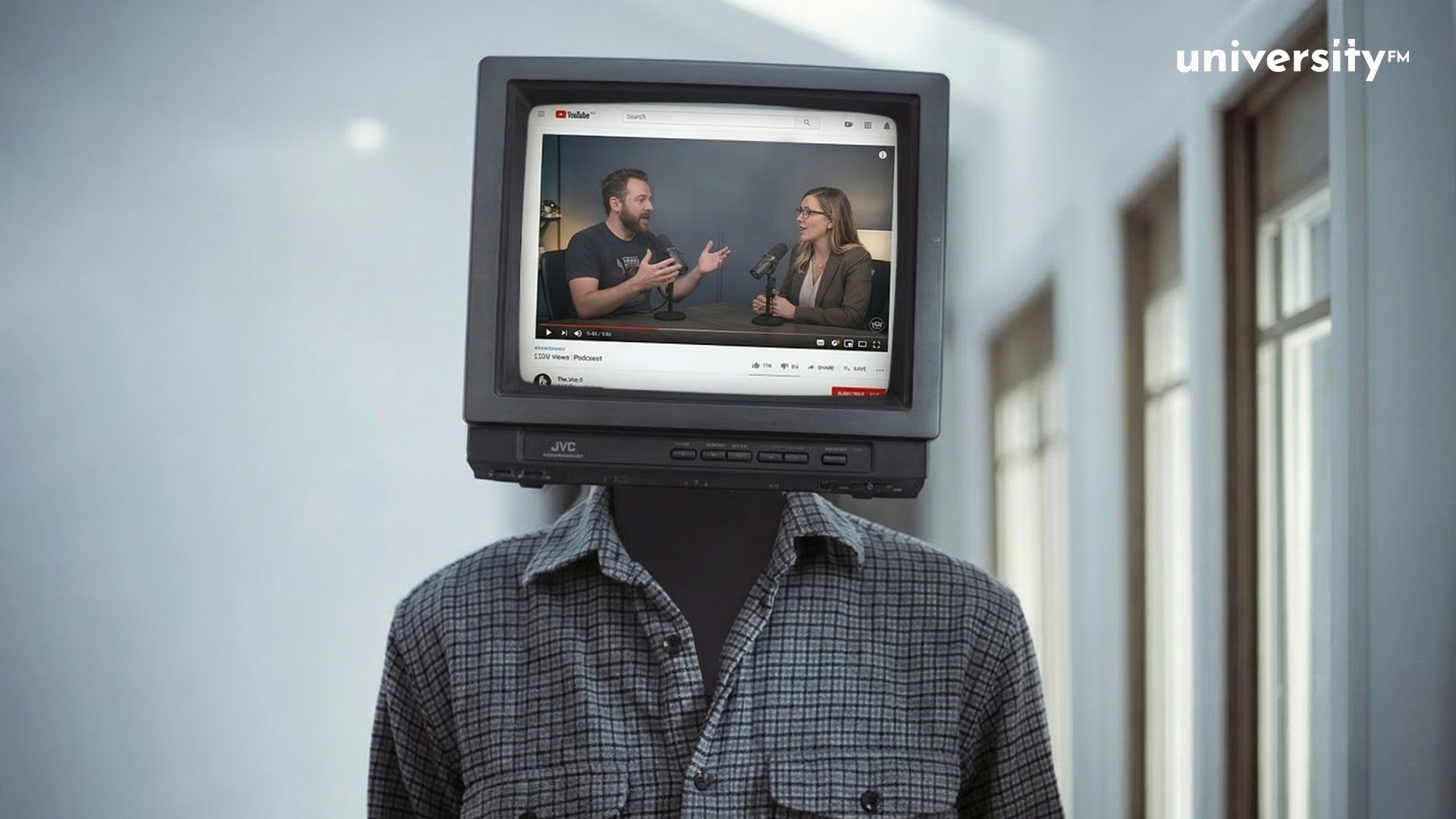
As video podcasts gain visibility across platforms like YouTube and Spotify, and more recently with Apple Podcasts supporting video, many creators are reconsidering whether their show should move beyond audio.
And if you’re thinking the same thing, how do you know if video is actually the right move for your podcast? Read on to find out.
Why Everyone Is Talking About Video Podcasting
One of the biggest shifts in podcast consumption is the growing attention on video. Many audiences today are not just listening to podcasts, they’re watching them.
In 2020, Spotify introduced its video podcast feature, aiming to create a more engaging connection between podcast hosts and their audiences. Meanwhile, YouTube, already a video-first platform, has rolled out tools and features that help creators publish and distribute their shows more easily. As these platforms continue investing in video, it has become an increasingly visible and influential part of the podcast ecosystem.
Numbers also tell an interesting story: according to Edison Research’s The Evolving Ear, 77% of first-year podcast listeners, many of whom are younger audiences, actively watch video podcasts, surpassing the 75% who listen to audio-only podcasts.
Does this mean audio is disappearing? No. Instead, it suggests that podcast consumption is becoming more flexible, with audiences moving between listening and watching depending on the platform, context, and the activity they’re engaged in at the time.
Should You Jump into Video Podcasting?
Before diving into video, it helps to take a step back and think strategically. During last year’s The Podglomerate webinar “What Audio Producers Really Need to Know About Video Podcasting”, Chris Colbert, CEO of DCP Entertainment, shared an important point: define your goals and understand your audience first.
Ask yourself a few key questions:
- Is your show audio-first or video-first?
- Who is your audience, and which platforms do they use most?
- Are they discovering your podcast through audio apps or on platforms like YouTube?
This can help you determine whether adding video or shifting your approach makes sense for your overall strategy.
If analytics or budget are holding you back, don’t worry, you can still start. Hayley Rose Danick, a former top YouTube Creator Partner Manager and Acquisitions Specialist, reminds creators that the only real mistake is not putting your content out there.
Getting started consistently allows you to learn as you go—discovering how the platform’s algorithm works, what resonates with your audience, and how to improve your content over time.
The takeaway: Plan strategically when you can, like Chris suggests. But if you’re ready to create without all the data or resources, follow Hayley’s advice and dive in. Experience is often the best teacher.
Using Videos for Podcast Growth
Video isn’t just a new format, it’s a powerful tool for growing your podcast audience. Data from Edison Research’s The Evolving Ear highlights an interesting trend: about 72% of first-year listeners and 68% of long-time listeners report that they started listening to the audio version of a podcast after discovering its video version.
This makes formats below particularly effective ways to reach new audiences. In short, video can be the first way listeners find your podcast, opening up new ways for them to engage and connect with your content.
1. Audiogram
2. Short Videos
3. Full Video
Tips Before You Start Video Podcasting
1. Focus on authenticity, not perfection
Everything doesn’t have to be perfect. A podcast is ultimately a way to connect and interact with your listeners. Just like any human conversation, small errors, pauses, or moments of imperfection are normal. In fact, authenticity often helps audiences feel more connected to a host.
2. Let the data guide your strategy
Guessing how your audience consumes content is a shortcut to frustration. Instead, dig into the data available on YouTube, Spotify, or Apple Podcasts—watch time, retention, engagement patterns. They tell a story about what’s actually working. Pair that with direct feedback: run a quick survey or poll to ask your listeners how they prefer to watch or listen. This combination of analytics and audience insight keeps your strategy smart and grounded in reality.
3. Start with what you have
When people think about video podcasting, one of the first questions that comes to mind is: What equipment do I need? What should my setup look like? While these are valid considerations, you can always start within your budget and capacity. Many successful podcasts begin with simple cameras, good lighting, and clear audio. What matters most is consistently putting your content out there and creating meaningful conversations or stories that entertain, inspire, or educate people.
Video podcasting is growing quickly, and for many creators it can expand opportunities for discovery, engagement, and promotion. However, it’s not a requirement for success. At the end of the day, whether it’s audio, video, or both, the most successful podcasts still focus on the same thing: creating meaningful conversations and stories that people want to hear.
Curious to learn more about video podcasting or ready to get started? Get in touch with us.